How to Choose DTF Hot-Melt Powder: Particle Size, Curing & Storage

In a DTF transfer system, hot-melt powder is not merely an auxiliary adhesive. It must work with the ink layer, matte DTF film, curing equipment, heat-press settings and final fabric. Even when the print looks sharp, unsuitable particle size, incomplete curing or moisture exposure can cause powder residue, white outlines, uneven adhesive layers, a stiff hand, cracking or poor wash resistance.
For that reason, buyers should not evaluate DTF powder by price per kilogram alone. A better process starts with the application and compares particle-size distribution, melting range, flowability, wash resistance, color and moisture-resistant packaging. Compatibility should then be verified with the buyer’s own film, ink, equipment and target fabrics.
1. Why particle size matters
Particle size affects powder coverage, detail reproduction, melting behavior and the final hand feel.
- Finer powder can cover small text and thin lines more effectively, but it may create more airborne dust or adhere to non-printed areas. Static electricity, humidity and recycled-powder cleanliness require tighter control.
- Medium particle size often provides a practical balance of coverage, flowability, hand feel and production stability for common garment graphics and automatic powder shakers.
- Coarser powder may flow well but can produce less even edges on detailed designs and may require more effective heat to melt completely.
Finer is not automatically better. Ask for the recommended application range and test thin lines, gradients, solid blocks and small text—not only one large, colorful sample.
2. White powder or black powder?
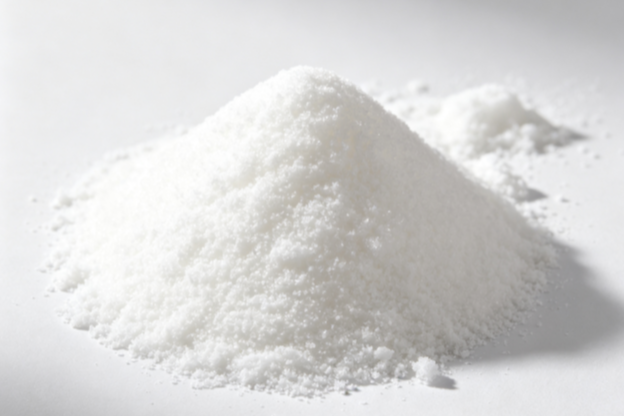
White hot-melt powder is the more common option and is used on many light and dark fabrics. Black powder is mainly selected to reduce visible white traces around dark designs or on dark garments. This does not mean that every black garment requires black powder.
Evaluate color influence, edge cleanliness, adhesive show-through, fabric stretch and wash durability. White and black powders should not be exchanged under identical process settings without testing.
3. Melting point is not the only curing temperature
A stated melting range describes the material, but actual production also depends on oven type, real surface temperature, conveyor speed, ink load, powder thickness and the environment. The same displayed temperature can deliver different effective heat on different machines.
During curing, the powder should change from visible particles into a continuous, even adhesive layer. Under-curing may leave dry granules and lead to powder loss or weak bonding. Excessive heat can make the layer stiff, yellowish or over-flowed and reduce elasticity. Use the machine display as a starting point, verify real temperature with an independent measuring tool and record temperature, time and line speed.
4. Build a small-batch compatibility test
Before a full purchase or supplier change:
- Print with the production ink, matte DTF film and intended print mode.
- Check even powder coverage and residue in non-image areas.
- Test thin lines, small text, gradients, solid colors and high white-ink areas.
- Record curing temperature, dwell time, conveyor speed and ambient humidity.
- Transfer onto the intended cotton, polyester or blended fabrics.
- Follow the confirmed cold-, warm- or hot-peel procedure and post-press if required.
- After conditioning, inspect edges, hand feel, stretch recovery and surface quality.
- Complete repeated wash tests before confirming mass-production settings.
Revalidate critical settings whenever film, ink, powder, print mode, curing equipment or fabric changes.
5. Why DTF powder clumps
Humidity, temperature and package sealing affect hot-melt powder. Long exposure after opening, wet tools, or sealing warm recycled powder in a container can increase clumping. Clumps reduce coating uniformity and may disrupt automatic powder-shaking or recycling systems.
Store unopened bags in a cool, dry and shaded area away from heat and damp floors. Reseal immediately after opening and mark the opening date. Keep only the amount needed for the shift near the line. Recycled powder should be filtered, kept clean and confirmed dry before mixing with fresh powder at a validated ratio. Powder that is visibly damp, discolored, odorous or difficult to sieve should not be forced back into mass production.
6. What importers should confirm
Buyers should verify:
- color, recommended particle range and compatible fabrics;
- suggested melting and heat-press settings plus the test method;
- net bag weight, inner and outer packaging and moisture barrier;
- batch identification, shelf life and storage conditions;
- availability of combined tests with DTF film and ink;
- MSDS, TDS and documents required by the destination market;
- lead time and shipping options for samples, trials and bulk orders.
YINMEIDA supplies white and black DTF hot-melt powder and can support compatibility trials with matte DTF film, DTF ink and the customer’s equipment and fabrics. Final settings must be validated under actual production conditions.
FAQ
Is finer DTF powder always better?
No. It can support fine details but requires better control of static, humidity, residue and recycling. Stable results depend on the whole system.
Can white powder be used on black T-shirts?
Usually yes, but visible residue around dark artwork must be checked. Black powder is an application-specific alternative and needs separate validation.
Can clumped powder still be used?
Slight, removable clumps may be screened and trial-tested. Stop production use if powder is damp, discolored, odorous or cannot pass evenly through a sieve.
Must curing settings change after switching powder?
Possibly. Different melting ranges, particle sizes and flow characteristics require a new check of curing and pressing conditions.